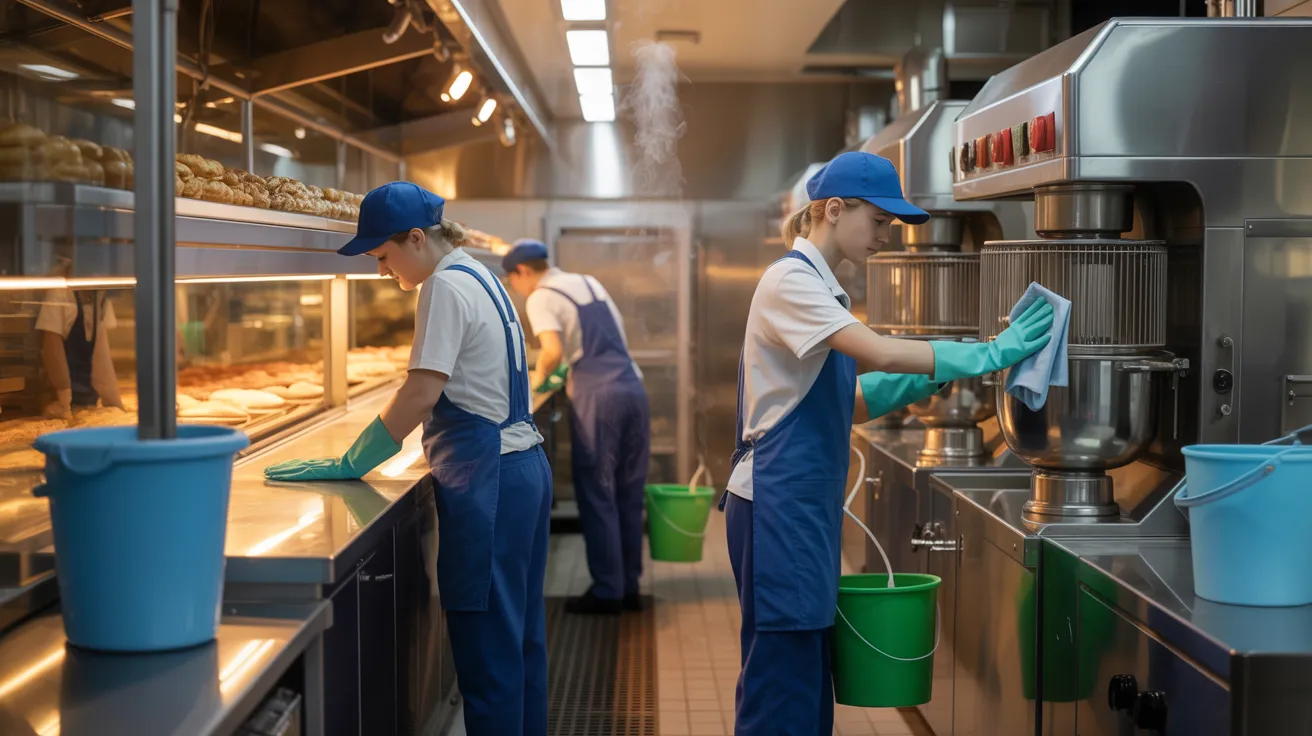
Commercial hygiene experts located in Brampton help maintain food service establishments, commissaries, bakeries, warehouses, and mobile food units to sanitation standards. They disinfect frequently handled areas, food prep surfaces, equipment, floors, drains, restrooms, and food handling areas with certified chemicals, at proper strength, and with verified times.
Essential Summary
- Food safety cleaning professionals in Brampton support restaurants, grocery departments, commissaries, warehouses, bakeries, schools, mobile vendors, and allergen-sensitive operations.
- Frequently contacted areas, food-contact equipment, kitchens, floors, drains, restrooms, and storage areas are sanitized using sectional methods to avoid cross-contamination.
- Trained contractors validate approved sanitizer dilution, compatibility, and exposure duration, then file finishing with tests, assessments, and correction logs.
- Threat, output capacity, changeovers, incidents, and standards must guide hygiene timelines, with routine, periodic, and annual tasks assigned by section.
- Suppliers need to exhibit hazard analysis knowledge, health regulatory expertise, WHMIS training, liability, endorsements, color-coded implements, and audit-ready maintenance records.
Which Brampton Establishments Need Food Safety Cleaning?
Food safety cleaning is mandatory for any Brampton facility that manages, stores, prepares, packages, or distributes food. Apply it to your operation if it comes under health oversight, food standards, or HACCP systems. This includes restaurants, cafeterias, commissaries, grocery food departments, butcher shops, seafood counters, convenience stores, and institutional kitchens.
Adherent hygiene cleaning is furthermore necessary in distribution centers, processing facilities, refrigerated storage, commercial bakeries, school meal programs, event venues, and delivery services. Mobile and temporary operations count as well, including food trucks, event vendors, and temporary stalls. Your location demands documented cleaning protocols when your team process ingredients, portion ready-to-eat items, reheat products, or store allergens. In Brampton, hygiene stays discretionary; it constitutes lawful, operational, and customer protection adherence.
Which Areas Do Brampton Cleaning Experts Cover?
You need professional cleaners who sanitize high-touch surfaces, kitchens, floors, and restrooms to meet food safety and public health standards. They focus on these spaces because they pose the greatest danger for cross-contamination, slip hazards, and sanitation breaches.
Understanding their cleaning procedures enables you to validate your facility's cleaning meets operational demands and regulatory compliance.
Addressing High-Touch Surface Cleaning
base sanitization intervals according to traffic, contamination risk, and operational use.
swabbing procedures to verify sanitization success
Cooking Zones, Walking Surfaces, and Restroom Environments
Brampton cleaning professionals will address kitchens, floors, and restrooms since each space presents separate hygiene concerns, injury, and community health challenges. In industrial kitchens, you need grease removal from cooking stations, appliance surfaces, drain systems, preparation areas, and backsplashes to minimize contamination and pest pressure.
You should also expect documented floor care. is also provided as part of the service.
Restroom sanitation requires disinfecting touch areas, bathroom equipment, stall barriers, supply stations, and bins, replacing items and managing smells. They also service restaurant moprooms, where chemical storage, sink hygiene, and drainage conditions can affect sanitation compliance and staff safety daily.
Food Safety Cleaning Significance for Brampton Businesses
Brampton businesses need to implement food-safe cleaning standards for meeting health code requirements and passing inspections. You also minimize bacterial spread through proper cleaning of food-preparation surfaces, appliances, and frequently-touched items. Most importantly, you safeguard community wellness by reducing the chance of food poisoning in your establishment.
Health Code Compliance
Food establishments in Brampton face mandatory safety protocols, making food safety cleaning vital to adhering to health code requirements, safeguarding patrons, and eliminating enforcement action. You must maintain hygienic food handling zones, documented cleaning schedules, safe chemical management, and verifiable staff procedures that meet municipal and provincial inspection expectations.
During inspections of your operation, officials evaluate if your sanitation system ensures safe storage, equipment sanitation, waste handling, and bathroom upkeep.
Contamination Management
Maintaining health code standards copyrights on your capacity to prevent cross-contamination during daily food handling and cleaning. You need to partition uncooked items from finished dishes, sanitize prep surfaces between tasks, and store chemicals away from food-contact items. Explicit protocols lower contamination threats and reinforce steady regulatory adherence.
Implementing allergen segregation helps ensure major allergens don't touch communal work zones, bins, or devices. Deploy dedicated cutting boards, color-coded tools, and clear tool marking so workers don't combine products during preparation or service. Require handwashing after handling fresh proteins, aquatic items, egg products, or allergen materials. Replace wiping cloths regularly, and validate disinfectant levels using test strips. When you train staff to follow these controls per shift, you create a cleaner, safer operation that meets Brampton's food safety expectations regularly.
Public Wellness Protection
If food safety cleaning deteriorates, you don't merely risk a failed inspection—you amplify the risk of foodborne illness affecting customers, staff, and the broader Brampton area. You also weaken your role in protecting public health, especially in high-traffic food premises where contamination can spread quickly through surfaces, equipment, and touchpoints.
You need sanitation procedures that remove soils, sanitize correctly, and verify results. That means following contact times, using approved disinfectants, recording cleaning times, and educating employees to meet health-unit expectations. These measures facilitate disease prevention by reducing pathogens before they reach food or hands. In Brampton, strong sanitation protects vulnerable populations, limits outbreak potential, and helps you demonstrate due diligence. When you clean to standard, you don't just meet regulations—you substantially decrease danger and promote secure food handling throughout the region.
Why Is Cleaning Essential for Food Safety Compliance?
Comprehensive cleaning schedules ensure food safety compliance by minimizing contamination hazards, managing pathogen expansion, and maintaining your facility's adherence to sanitation requirements under HACCP-based programs and public health regulations. You verify that contact surfaces stay visibly clean and microbiologically controlled, facilitating documented preventive controls and inspection readiness.
Diligent cleaning further reinforces allergen control by extracting residues that can trigger undeclared allergen exposure. When you combine validated sanitation procedures with standards training, your staff can implement standardized methods, employ approved chemicals accurately, update records properly, and address discrepancies in advance of problems worsen. Consistent cleaning enables audit trails, validates corrective actions, and demonstrates due diligence throughout audits. Furthermore, it aids you preserve product safety, copyright operational compliance, and decrease the risk of regulatory actions, product recalls, complaints, and unnecessary safety threats.
When Ought You Plan Commercial Cleaning?
Cleaning routines perform optimally when you establish them according to risk levels, output volume, and compliance needs rather than using only a fixed calendar alone.
Seasonal thorough cleaning is most effective for shutdowns, weather-related soil buildup, or pest-pressure periods
How Do You Choose Brampton Cleaning Experts?
Evaluate providers first by food-safe sanitation requirements rather than price alone. You must ensure each provider understands CFIA, public health, and HACCP requirements for your business. Request proof of insurance, WHMIS compliance, staff training documentation, and supervision methods. Check technician understanding of cross-contamination risks, chemical safety, and traceable sanitation records.
You should also assess operational reliability and responsibility. Request references from food facilities in Brampton, then examine response times, corrective-action procedures, and communication standards. Confirm the company participates in supplier audits and can present audit-ready records when regulators or third parties request evidence. Check whether equipment is maintained is performed, colour-coded tools are used appropriately, and facility-specific risks are recognized. A qualified provider protects compliance, product quality, and your brand reputation.
What does a Food Safety Cleaning Plan encompass?
Document a plan that defines every sanitation task, standard, and responsibility before starting production. You should record cleaning schedules, approved products, ratios, contact periods, tools, and validation approaches for each area, surface, and device. Ensure you include pre-operational inspections, corrective actions, and employee training requirements.
Your strategy should also tackle cross-contamination controls, waste handling, pest-prevention measures, and documented schedules for facilities, drains, flooring, and food-preparation surfaces. Outline how you'll distinguish between uncooked and prepared items, support ingredient tracking, and maintain accurate allergen labeling through validated cleaning between product changes. You should establish accountability, document signed records, and assess results against regulatory standards, HACCP controls, and customer requirements. When gaps appear, modify procedures immediately and instruct staff.
Regular Posed Questions
Will cleaning services handle overnight shifts at Brampton facilities?
Yes, you can book cleaning services to manage overnight shifts in Brampton facilities. You'll coordinate nighttime cleaning around operational windows, access controls, and staffing requirements. Services generally map overnight logistics to reduce disruption, ensure compliance, and document completed tasks. You should confirm arrival timeframes, supervision, access protocols, and disposal methods before beginning service. If you operate regulated spaces, you'll also need documentation that enable audits and compliance verification.
Can sanitation professionals handle emergency spill response?
Yes, you can discover many Brampton cleaning professionals providing hazard containment options. They handle hazardous incidents, assess dangers, contain affected zones, and initiate rapid cleanup to reduce risk and prevent business disruption. You should confirm timeframes, credentials, PPE measures, and waste procedures. If your facility must adhere to regulations, pick a provider that documents events, adheres to standards, and ensures audit compliance.
Are green disinfectants secure for food-contact surfaces?
Absolutely, plant-based sanitizers prove to be secure for surfaces contacting food when you choose solutions certified for food use and meeting regulatory standards. begin here You must confirm contact times, concentration levels, and rinse procedures in advance of use. Plant-derived products decrease toxic chemical contact, though you still need demonstration of efficacy against harmful bacteria. For ensuring residue-free conditions, stick to exact manufacturer guidelines and verify the disinfecting agent satisfies food sanitation requirements.
Can sanitation programs be customized for seasonal variations?
Yes, you can adjust cleaning schedules for seasonal production changes. You should modify timing, labor allocation, disinfectants, and confirmation procedures to fit seasonal workflows while sustaining regulatory compliance. You'll decrease equipment downtime by organizing cleaning around equipment transitions, peak seasons, and usage patterns. You should further modify written procedures, employee training, and environmental testing to address seasonal hazards, additional allergens, or increased soiling. Continuous reviews maintain your plan efficient.
Do professional cleaners instruct your team in sanitation best practices?
Yes, commercial cleaners often train your staff on sanitation best practices. You receive employee instruction on correct chemical application, contact times, cross-contamination prevention, machine breakdown, and documentation. They generally follow instruction with HACCP, GMP, and CFIA or local public health requirements. Many also conduct hygiene inspections to confirm adherence, identify gaps, and reinforce corrective actions. This helps you maintain consistent procedures, succeed in audits, and reduce food safety risks daily.
Summary
Through engaging Brampton food safety and commercial cleaning specialists, you do far more than tidy—you keep your operation prepared for inspections and your standards stay aligned with regulations. From kitchen spaces to processing areas, all clean areas and organized zones reduce contamination risks and avoid major losses. Through scheduling maintenance at proper intervals and sticking to a solid cleaning plan, you safeguard your team, clients, and your standing. Within strict regulatory frameworks, clean conditions must be a priority—they are fundamental to success.